
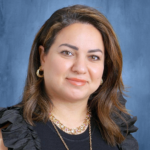
The Advocacy Report from Washington Marisa Nathan, a longtime educator of multilingual students and their teachers in MN and WI, and Sagal Sabrie, a current MLL teacher in St. Paul…
Leah Granstrom, Norah Harper Godderz, Sergio Madrid

The 2025 TESOL International Advocacy Summit was held in Washington, D.C. from June 16th to 18th. The Advocacy Summit is a three-day advocacy event that brings together educators and leaders from around the country to advocate for legislation, funding, and support for English learners (ELs) in education. This experience provided a channel for collaboration with advocates from across the US and a space to explore the nature of the legislation and funding that impact our English learners. Key issues explored this year included Title I, II, and III of the Elementary and Secondary Education Act (ESEA), Protecting Sensitive Locations Act, and support for the maintenance of the U.S. Department of Education. In our meetings with members of Congress, we provided our personal narratives to paint a clear and real picture of the impact of legislation and funding on students. We extend our gratitude to MinneTESOL and TESOL International for providing this opportunity to both ex

pand our knowledge and voice our experiences and concerns As educators, our expertise is the classroom. The workshop offered valuable insights from policy experts, union leaders, congressional staffers, and other experts in their respective fields. From these presenters, we learned the great risk federal education funding is in posed by this current political landscape. These presentations offered the opportunity to connect our personal experiences in the classroom to the precise laws and bills that impact our work. As we move forward in our careers, the Advocacy Summit created the first step on a journey of advocacy
beyond the classroom. Highlights of the TESOL’s Advocacy Action Day

advocates from around the country (Figure 4). This evening provided a welcoming space to share stories with other educators and explore the context of English education in other states. Additionally, we had the opportunity to engage in meaningful and inspiring conversations with various education leaders, including Giselle Lundy-Ponce, Director of the AFL-CIO. In this space, we jumped into the role of advocates, exploring ways to apply our expertise in the political world (figure 3).

information on immigration enforcement and schools, the status of Title III, shrinking and reorganizing of the U.S. Department of Education, the termination of grants and contracts, and ESSA waivers. This established the basis of our specific requests for our Congress members. Montserrat Garibay, Assistant Deputy Secretary and Director of the Office of English Language Acquisition, delivered a keynote speech that was both moving andengaging (Figure 6). In th

2025, was the day scheduled for advocates to meet with their respective Congress members (Figure 2). We set off to Capitol Hill, where we prepared to meet with our Representatives to advocate for their support regarding education funding and legislation. We received folders with “leave-behinds” for members of TESOL International’s primary asks and were prepped in the morning with breakfast by Jeff Hutchenson (Figure 1). Ready to embark, we spent the rest of the day in the House of Representatives and Senate Buildings meeting with our Congress Members from Minnesota. This included meetings with education staffers from Rep. Ilhan Omar, Rep. Betty McCollum, Rep. Tom Emmer, Senator Tina Smith, and Rep. Angie Craig. In many of our meetings, support for our requests was evident. We remain in contact with congressional staffers moving

forward and hope to strengthen our relationships with our congressional teams in order to secure education funding and relevant legislation.
With an entirely different political landscape from last year, our major asks included:

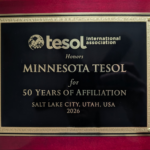
As we move forward, we would like to express our profound gratitude for this opportunity, provided by MinneTESOL and TESOL International (Figure 8). This summit provided a crucial space to explore the legislation that directly impacts our students. We emphasized the importance of the U.S. Department of Education, Title I, II, and II funding under the ESEA, and the Protecting Sensitive Locations Act. Our meetings with congressional staffers and fellow advocates provided the foundation for long-lasting relationships with our congressional offices, ensuring continued advocacy for our English learners. We urge our fellow educators and advocates to join this important task of speaking up on behalf of
our students, going beyond the classroom to advocate for change within our education system and political system.
The Minnesota English Learner Education (MELEd) Conference will be held November 20-22 2025 at the Saint Paul Rivercentre MELEd is a partnership between MinneTESOL and the Minnesota Department of Education. It is a merger of the annual MinneTESOL Fall Conference and the Minnesota ESL, Bilingual, and Migrant Education Conference. The Call for Proposals has been extended and will remain open until August 15. To submit a proposal, click here. Presenters will be notified of feedback/acceptance on August 20.
In “Pay attention to this! Demonstratives in university-level academic lectures,” Bonnie Swierzbin argues for the importance of demonstratives in academic language, including lectures. She explains that demonstratives function to direct listeners’ attention to complex entities such as ideas, events, and situations, and encourages practitioners to use authentic language samples to help advanced-level students understand and synthesize the big picture of a lecture.
Fernando Lesniak’s article, “Equity in the language classroom: Embracing gender-just pedagogies for a more inclusive environment,” advocates for educational approaches that challenge traditional norms and stereotypes, promote equity, and support student engagement. The author highlights the need for gender-just teaching in language education to create classrooms that respect and include all gender identities. Practical strategies and examples are provided to help teachers build learning spaces that are supportive for all learners.
Journal submissions are accepted on a rolling basis.
MinneTESOL will be at the Great Minnesota Get-Together! On Thursday, August 21 (opening day), volunteers from MinneTESOL will be in the Education Minnesota booth in the Education Building at the Minnesota State Fair. We will ask questions from the US Citizenship test and hand out swag to those who answer correctly. Look for an e-mail from MinneTESOL recruiting MinneTESOL members to volunteer at this fun event.

The Minnesota English Learner Education (MELEd) Conference will be held November 20-22 2025 at the Saint Paul Rivercentre MELEd is a partnership between MinneTESOL and the Minnesota Department of Education. It is a merger of the annual MinneTESOL Fall Conference and the Minnesota ESL, Bilingual, and Migrant Education Conference. The Call for Proposals will open in June.
In “Learning to teach science to multilingual learners: A study of preservice teachers,” Walter Aminger presents his research on what secondary science teachers learned about effective instruction for MLs during a 13-month, post-baccalaureate teacher education program. Findings indicate that education courses and field work experiences can strengthen preservice teachers’ understanding of effective science instruction for MLs.
Journal submissions are accepted on a rolling basis.
Past MinneTESOL newsletters can be found on our website, at http://minnetesol.org/minnetesol-newsletters
We are always looking for information to share from our members. Please send newsletter submissions to admin@minnetesol.org.